

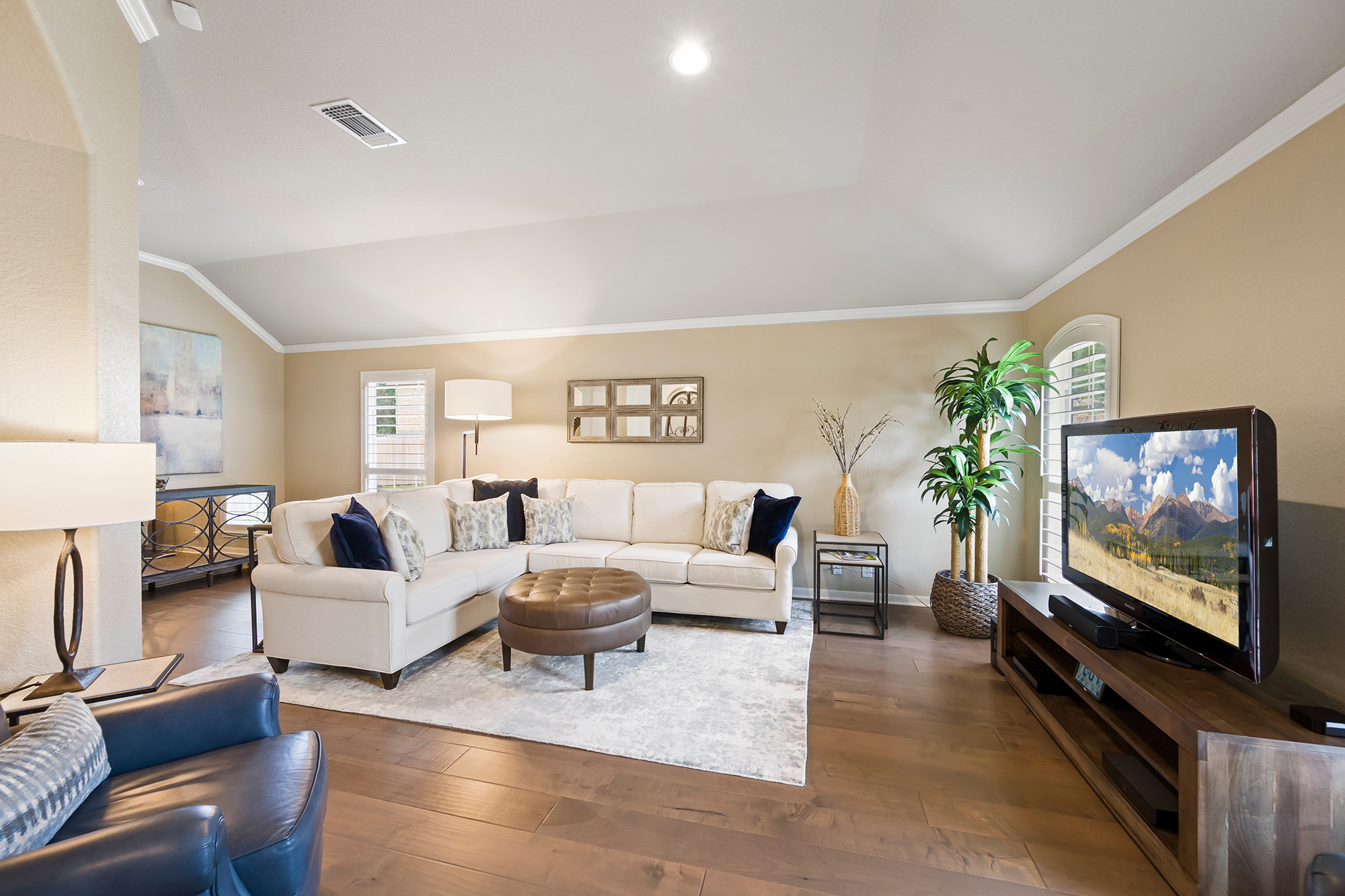
A new hardwood floor can become one of the most noticeable features in your home, but the decision is not simply about choosing a wood species or color. You also need to decide whether solid hardwood or engineered hardwood makes more sense for the space.
Both give you the authentic beauty of real wood. The difference is in how they are constructed, how they respond to changes in moisture, and where they can be installed. For homeowners in the Reading area, those practical details can matter just as much as appearance.
Solid Hardwood Offers Traditional Longevity
Solid hardwood flooring is made from a single piece of wood throughout each plank. That traditional construction gives it a substantial feel and a major long-term advantage: it can generally be sanded and refinished multiple times over its life.
That makes solid hardwood appealing if you are thinking about your floor as a decades-long investment. It can be refreshed when the surface becomes worn, allowing you to change the appearance without completely replacing the floor.
Solid hardwood is generally best suited to above-grade rooms with an appropriate wood subfloor. It is also more sensitive to seasonal moisture changes because the entire plank responds to changes in humidity.
That consideration can be especially relevant in Pennsylvania homes. Summers can bring higher humidity, while heated winter interiors tend to be considerably drier. Wood naturally expands and contracts as moisture levels change, so proper installation, acclimation, subfloor preparation, and indoor environmental conditions all matter.
Engineered Hardwood Is Built for Greater Stability
Engineered hardwood flooring still gives you a genuine hardwood surface, but the construction underneath is different. A real wood wear layer is bonded to a layered core, which helps the plank remain more dimensionally stable as temperature and humidity fluctuate.
That makes engineered hardwood particularly useful when the installation environment presents challenges for traditional solid wood. Depending on the specific product and installation requirements, engineered flooring can be suitable for applications where solid hardwood is not the right choice, including certain concrete or below-grade installations.
Always follow the manufacturer's installation requirements for the product you select. Engineered hardwood can also be a practical choice if you want the look of wider planks. Its layered construction can provide additional stability for designs that might be more sensitive to movement when made from solid wood.
The Subfloor and Location Should Guide Your Decision
One of the biggest mistakes homeowners make is choosing between solid and engineered hardwood based only on appearance. Instead, start with the room. If you are flooring an above-grade living room, dining room, hallway, or bedroom over a suitable wood subfloor, solid hardwood may be an excellent fit. If the project involves a concrete slab, a finished lower level, or a space where seasonal moisture changes are a bigger concern, engineered hardwood may offer greater flexibility.
The existing floor structure matters, too. Professional hardwood installation begins well before the first plank is placed. Boyer's Floor Covering notes that the installation area needs to be clean and flat, and its installation process includes preparing the room, addressing the existing flooring, and allowing the completed floor to properly cure when finishing is involved.
That is why an in-home evaluation can be so useful. Your subfloor, room location, existing flooring, and moisture conditions can all influence which product and installation method make sense.
Think About Refinishing, Lifestyle, and Long-Term Plans
Your plans for the home should also factor into the choice. Solid hardwood has a clear advantage if your priority is maximum refinishing potential over many years. Engineered hardwood can also be refinished, but the number of times depends heavily on the thickness of its real wood wear layer and the manufacturer's specifications.
Think about how you actually use the room. A busy household with children, pets, frequent entertaining, or heavy foot traffic may place different demands on a floor than a rarely used formal room. Appearance matters, too. Fortunately, you do not have to sacrifice style by choosing one construction over the other. Both can provide the warmth and natural character homeowners associate with hardwood, and Boyer's Floor Covering offers hardwood options in a range of species, visuals, and tones.
Choosing the Right Hardwood for Your Reading-Area Home
There is no universal winner between solid and engineered hardwood. The better choice depends on where the floor is going, what is underneath it, how your household uses the space, and how you want to maintain the floor over the years. If you are planning hardwood installation in Reading, Wyomissing, Douglassville, Oley, Kutztown, or Fleetwood, take the time to compare both constructions before making your final selection.
See Your Hardwood Options in Person
The best way to narrow down your choices is to see and compare real flooring samples with your home's lighting, cabinetry, furniture, and overall style in mind. Contact Boyer's Floor Covering today and visit the showroom to explore hardwood options and discuss the right installation approach for your project. We proudly serve Reading, PA and homeowners throughout Wyomissing, Douglassville, Oley, Kutztown, and Fleetwood, PA.


